
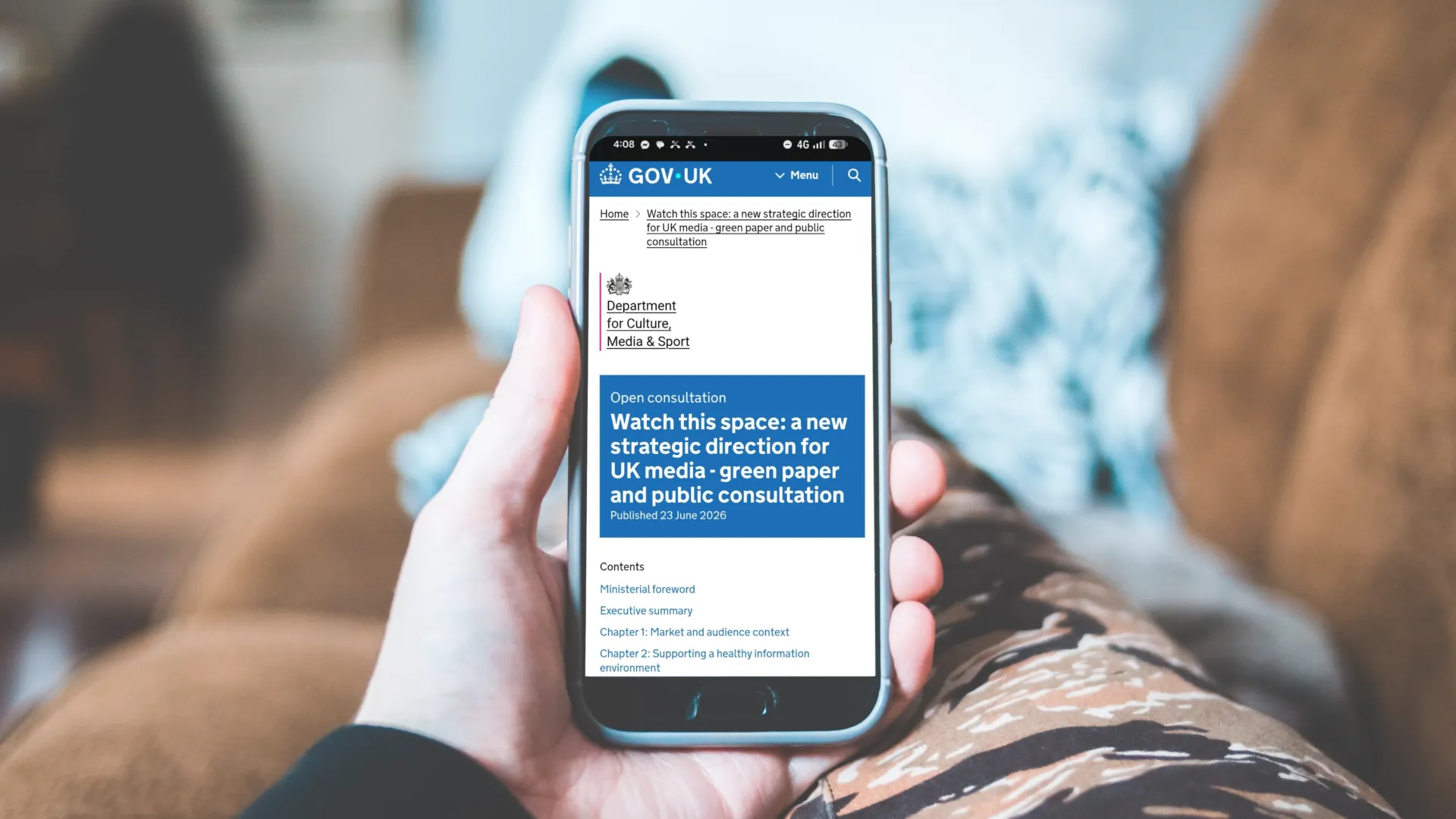
The Independent Media Association welcomes the government's recognition that private monopolies are shaping what people see, and that this is contributing to disinformation, outrage-driven virality, isolation and addiction. However, we are disappointed that the green paper does not adequately address the needs of independent, regulated non-broadcast media.
Our members voluntarily submit themselves to independent regulation through Impress, demonstrating a commitment to independently enforced editorial standards and public accountability. Yet their content is often disadvantaged by platform algorithms, which we understand may deprioritise regulated publishers relative to larger, unregulated outlets. Any future prominence regime should reward publishers that voluntarily meet independently enforced public-interest standards, rather than relying solely on statutory definitions of a news publisher.
Our principal concern is the paper's suggestion that the Online Safety Act's definition of a recognised news publisher could serve as the starting point for determining which publishers benefit from prominence. That definition was designed for a different purpose and was never intended to distinguish genuinely trustworthy public-interest journalism from other news publishers. It requires publishers to have a standards code and complaints process, but not that those standards be independently enforced.
As a result, publishers with no external accountability may qualify, while there is no requirement for independent oversight through a regulator such as Impress. We believe this is an inadequate foundation for determining which publishers should receive the significant public benefit of prominence.